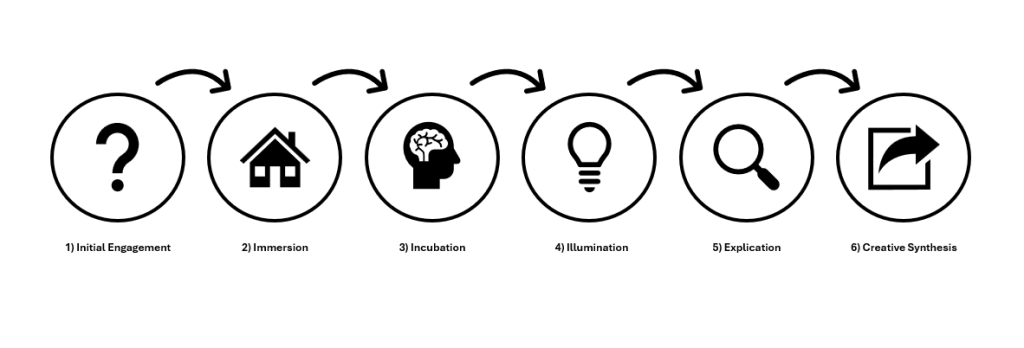
For my current MA research project into how wayfaring and analogue photography disrupt the everyday and the impact of that on my artist identity, I have chosen to follow a heuristic research inquiry (Moustakas, 1990) methodology. I chose this methodology because ‘the self of the researcher is present throughout the process and, while understanding the phenomenon with increasing depth, the researcher also experiences growing self-awareness and self-knowledge’ (Moustakas, 1990, pg. 9). The nature of my research is often focused on uncovering my artist identity and so Heuristic research that requires ‘self-search, self-dialogue and self-discovery’ (Moustakas, 1990, pg. 11), where the outcome of the inquiry is one where the ‘self of the researcher is illuminated’ (Moustakas, 1990, pg. 11), felt like the right choice.
Furthermore, as someone who operates on the earth rhizomatically, I was drawn to a methodology that allowed for ‘spontaneous shifts’ (Moustakas, 1990, pg. 17) and that ‘had a path of its own’ (Moustakas, 1990, pg. 17). I am also naturally prone to ‘indwelling’ (Moustakas, 1990, pg. 24). I have come to call the ‘incubation’ (Moustakas, 1990) part of the process composting.
My data consisted of 300 black and white, analogue photos, which were taken over the course of 4 separate wayfaring events in my home village. The photographs sat alongside reflective journal entries documenting my lived experience of wayfaring, taking photos and dwelling in the research question.
Thematic analysis acted as the tool for the explication phase of my research process. In such, thematic analysis was the method, whilst heuristic inquiry was the methodology; an important distinction. ‘Thematic analysis is a method for developing, analysing and interpreting patterns across a qualitative dataset’ (Braun and Clarke, 2022, pg. 4). The analysis involves systematic and thorough coding in order to develop themes. Codes are a ‘heuristic device used to enrich understanding, and push ourselves into interrogating the dataset and our meaning-making with it’ (Braun and Clarke, 2022, pg. 59). It is a lengthily process that involves sitting with, or indwelling in, the data and each time you see something that seems pertinent to the research question or piques your interest, you add a label. This labels do not need to be perfect on the first sitting, hence some ambiguity in my coding examples. Each time you sit with the dataset, you clarify and refine the labels; the process is evolving and this is what I enjoy about it as it reflects what I am researching.
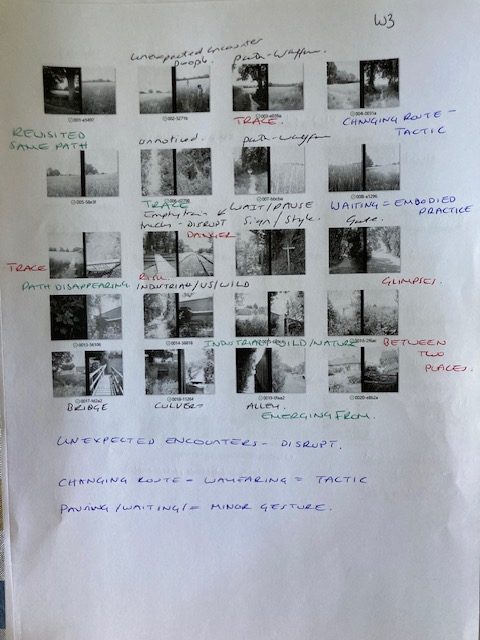
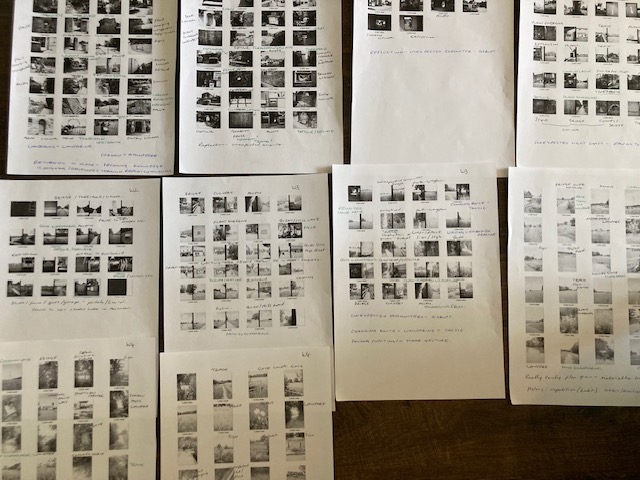
I started the data coding stage by looking at the photographs as thumbnails. I annotated each of the 4 groups of photos, looking for things that stood out to me. I repeated this exercise 4 times, on different occasions, each time responding to the data in front of me. The first and second stage of coding like this resulted in mainly semantic labelling, drawing out what was explicit in the photos e.g. bridge, tunnel, alley. The third and fourth occasions of sitting with the data, allowed for a move towards a more latent labelling; what the things that I was identifying meant e.g. transition, becoming, moving towards new knowledge.
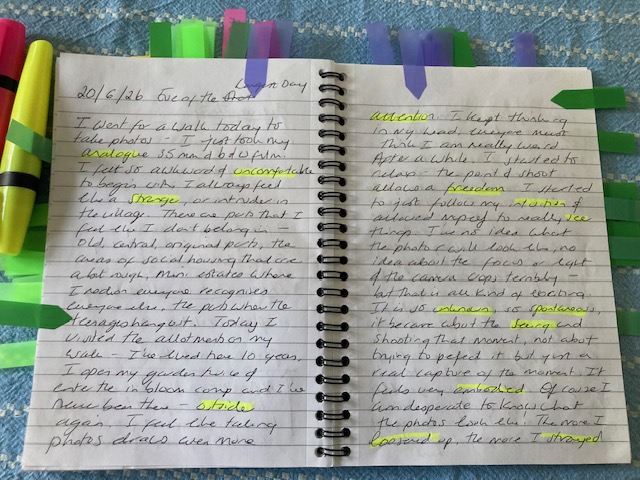
After this, I followed a similar process of coding the data within my reflective journals. I identified moments that were interesting with green sticky notes. I then narrowed these down (due to the limited scale of the research project) to the 9 key journal entries (purple sticky notes) which felt the most personal or pertinent. Within these entries, I coded for ideas that stood out using a highlighter.
The next stage of the analysis of the data was to cluster the codes together and look for themes. Many of the ideas recurred across each of the four walks in both the visual and textual data, this suggested to me that I was beginning to identify robust patterns that were not isolated events (it is also evidence of the rigour of the analysis of the data). I initially identified 8 themes: identity, uncertainty, encounter, attending, liminality, embodied practice, layers and place. After spending some time considering the themes, I realised that identity was the overarching theme and encounter/attending could in fact be merged as one theme. I decided to dismiss layers/place, as although they are very interesting to me as emerging themes within my research, they don’t currently answer the question and I suspect are themes to return to in future work.
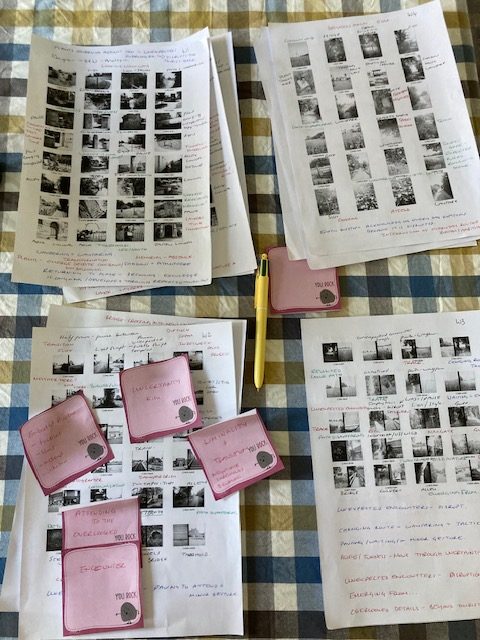
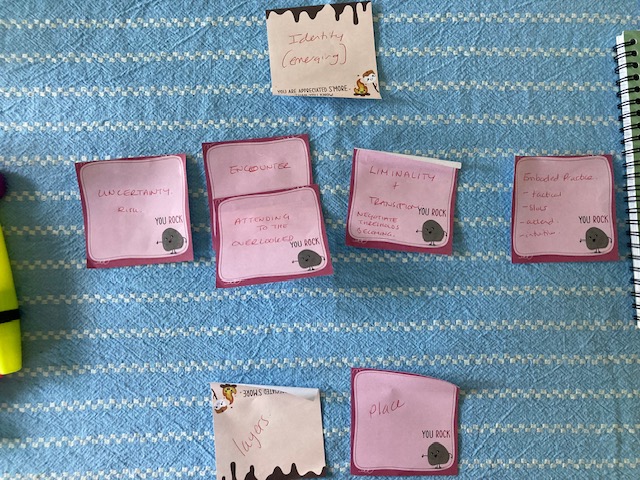
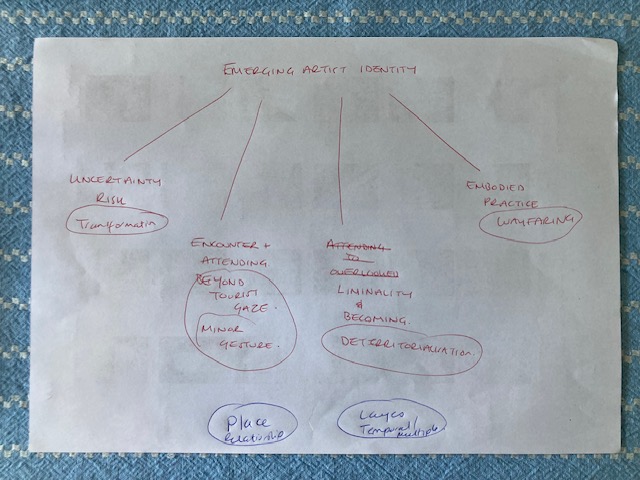
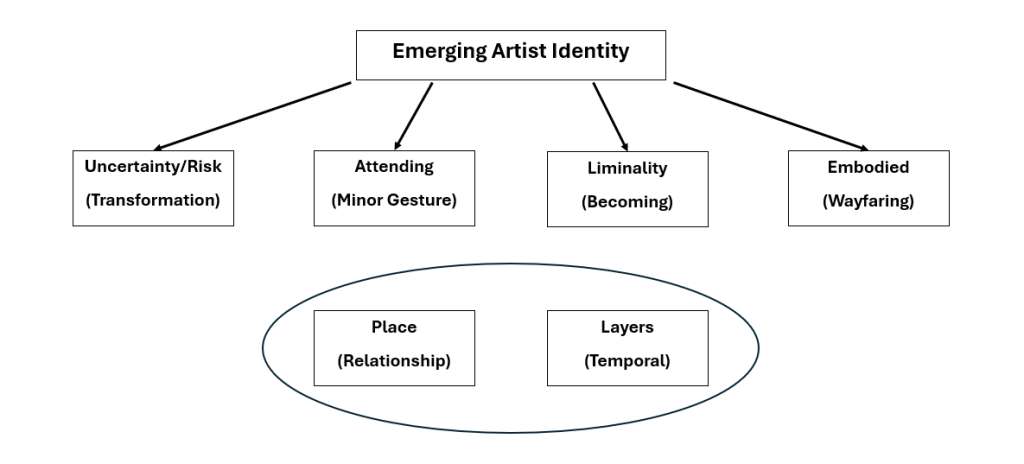
Thematic analysis allowed me to code both the visual and textual data that I had gathered during my research. I was able to spend quite a bit of time dwelling in the data, reading, looking and revisiting in order to record my observations, emotions and the meaning I was explicating. The process allowed themes to develop that captured the essence of my lived experience, deepened my interpretation of the data and felt consistent with the immersion required for heuristic inquiry.
It was important for me that the photographs were not just illustrations, but data which could be coded for symbolism, emotion, experience and meaning. Reflexive thematic analysis sits perfectly with this project as it acknowledges the research as an active participation in the research. ‘In the process, I am not only lifting out the essential meanings of an experience, but I am actively awakening and transforming my own self’ (Moustakas, 1990, pg. 13).
It was an incredibly enlightening experience as the analysis of the data and the subsequent thematic mapping, gave way to 4 strong themes, which sat underneath a central theme (incidentally, I was trying not to look specifically at my identity, but it seems to always end up being integral to my research). The codes went from feeling somewhat disconnected to strong themes supported by multiple photographs and journal entries. As with the move from semantic to latent coding, the heuristic research allowed me to build bridges between the explicit, implicit and tacit knowledge. This type of inquiry, similar to my lived experience, is in ‘the real of in between, or the intuitive’ (Moustakas, 1990, pg. 23).
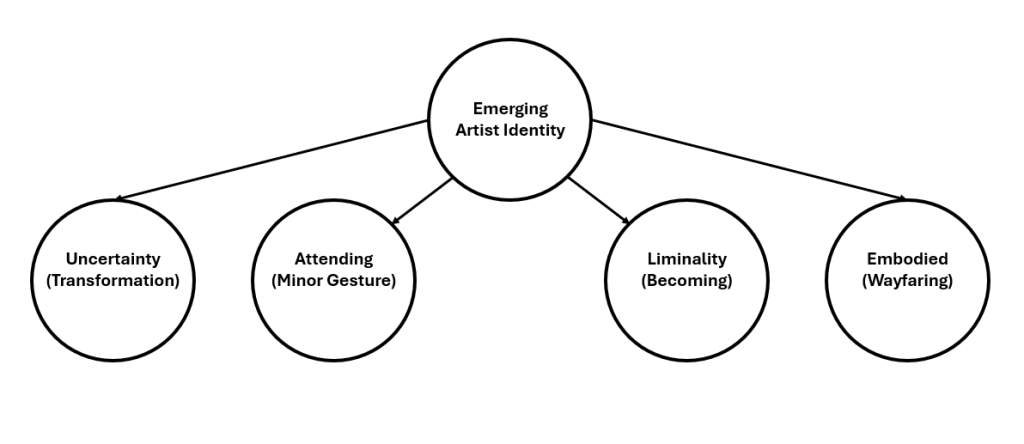
The next step was to ensure the 4 themes did in fact answer the research question robustly. This was a crucial step in the analysis of the data as it allowed me to identify an emerging narrative.
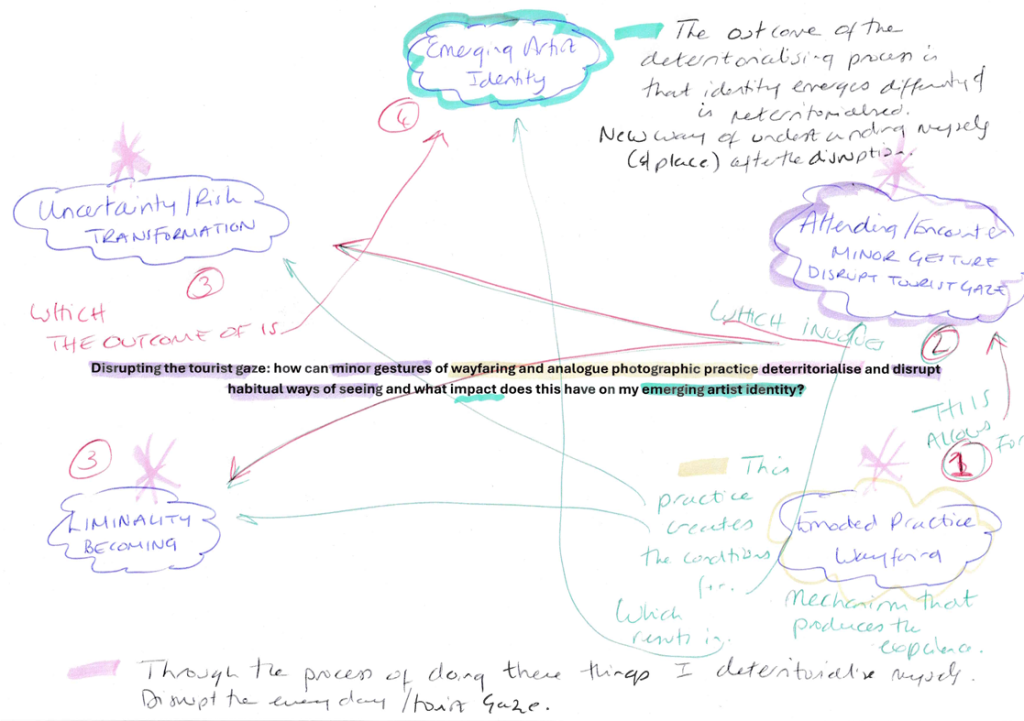
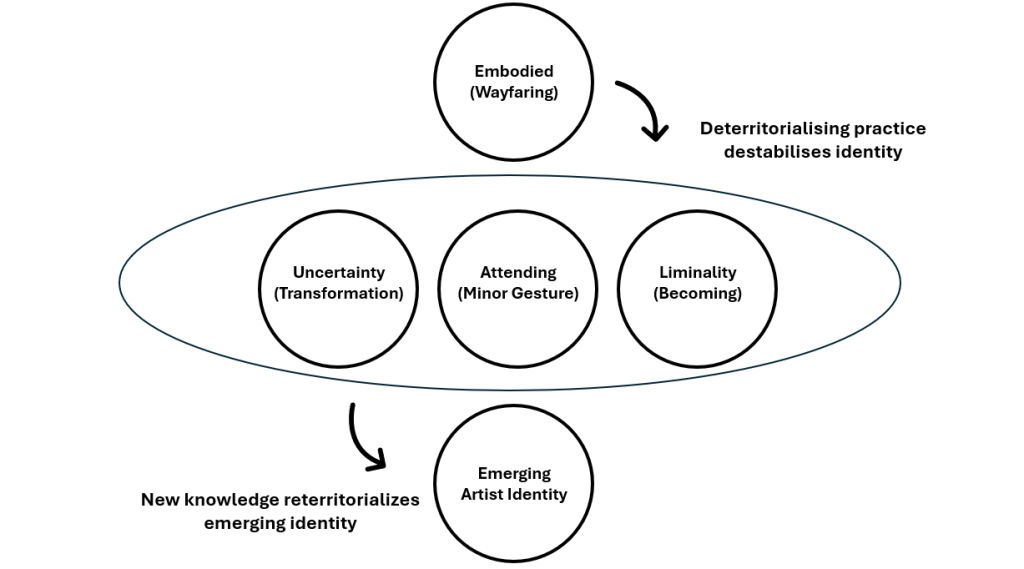
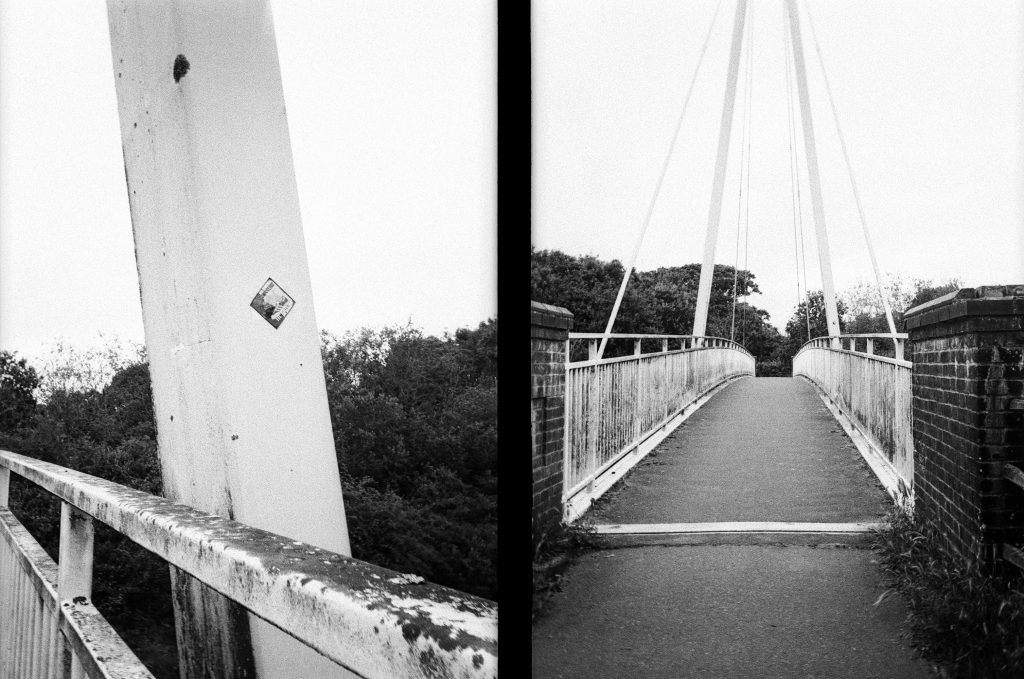
Once I was happy that the analysis stage of the inquiry process was complete, I chose 4 photographs which I felt acted as strong evidence for each of the themes. A challenge when I have 300 to choose from!
‘Having made a discovery, I shall never see the world again as before. My eyes have become different; I have made myself into a person seeing and thinking differently. I have crossed a gap, the heuristic gap, which lies between problem and discovery’ (Polyani, 1962, pg. 143). When I read words like these, it is not only illuminating but deeply moving, the connection between Polyani’s thoughts on discovering new knowledge (Polyani 1962), the heuristic process (Moustakas, 1990), my lived experience of deterritorialising processes (Deleuze & Guattari, 2013), the risk of personal transformation (Gould, 1979), the need to cross through liminal spaces (Turner, 2009, pg. 95) and thresholds (Meyer et al, 2010), the actual evidence of this in my photographs as something I was recurringly drawn to when I allowed for minor gestures (Manning, 2016) and new lines of flight (Deleuze & Guattari, 2013). Research is breath taking.
‘Once one enters into the quest for knowledge and understanding, once one begins the passionate search for the illumination of a puzzlement, the intensity, the wonder, intrigue, and engagement carry one along through ever growing levels of meaning and excitement’ (Moustakas, 1990, pg. 65).
Reference List
Braun, V. and Clarke, V. (2022) Thematic analysis : a practical guide. Los Angeles: SAGE.
Deleuze, G. and Guattari, F. (2013) A Thousand Plateaus. London: Bloomsbury Academic.
Gould, R. (1979) Transformations: Growth and Change in Adult Life. New York: Simon & Schuster.
Manning, E. (2016) The Minor Gesture. Georgia: Duke University Press.
Meyer, J., Land, R., and Baillie, C. (2010) Threshold Concepts and Transformational Learning. Rotterdam: Sense.
Moustakas, C.E. (1990) Heuristic research : design, methodology, and applications. London: Sage Publications, The International Professional Publishers.
Polanyi, M. (1962) Personal knowledge : towards a post-critical philosophy. London: Routledge.
Turner, V.W. (1995) The ritual process : structure and anti-structure. New York: Aldine de Gruyter.