Recently, I met a potter, who unwittingly became a critical mirror (Brookfield in Mezirow et al, 2000, p.146).
I was on holiday, fresh from the frenetic nature of the end of term, with my family in Cornwall. We had spent the day exploring the north coast and were teasing our way back along narrow roads, towards the Roseland. We had just crossed a ford (a liminal threshold), when we spotted the sign for the St Kew pottery. Traditionally, I like to find a piece of handmade pottery on my travels to bring home. I love having a keepsake from my time away but also value the work that goes into pottery (my parents work in ceramics). I was elated as I had yet to find anything anywhere else, so we followed the signs and found ourselves at the home and studio of potter, Jon Whitten. Luckily, he we caught him as he was about to set off on a small tractor and he invited me in to see his studio/workshop. I was, naturally, in awe. He was incredibly knowledgeable, passionate and we had a most engaging conversation about our backgrounds and our thoughts on the arts in education. It was very inspiring, but the most crucial part occurred when, after explaining my parents’ work and that I had not tried ceramics, I, with the utmost certainty and authenticity, explained what my practice was. That I am a photographer and poet. That I gather soil from the South Downs and make prints with hand made earth pigments. That I dabble in psychogeography and my work connects to the landscape. It was a crucial moment of transformation; telling somebody in the art world, who knew nothing about me as an individual, that I too was an artist with a practice that was authentic to me. I too am an artist.
‘Any critically reflective effort we undertake can only be accomplished with the help of critical friends’ (Brookfield in Mezirow et al, 2000, p.146).
This moment encouraged me to revisit my artist statement and update it with increased confidence and honest knowledge of what my practice has become; to do it justice. I am proud of what I have created, the statement should reflect the complexities of that.
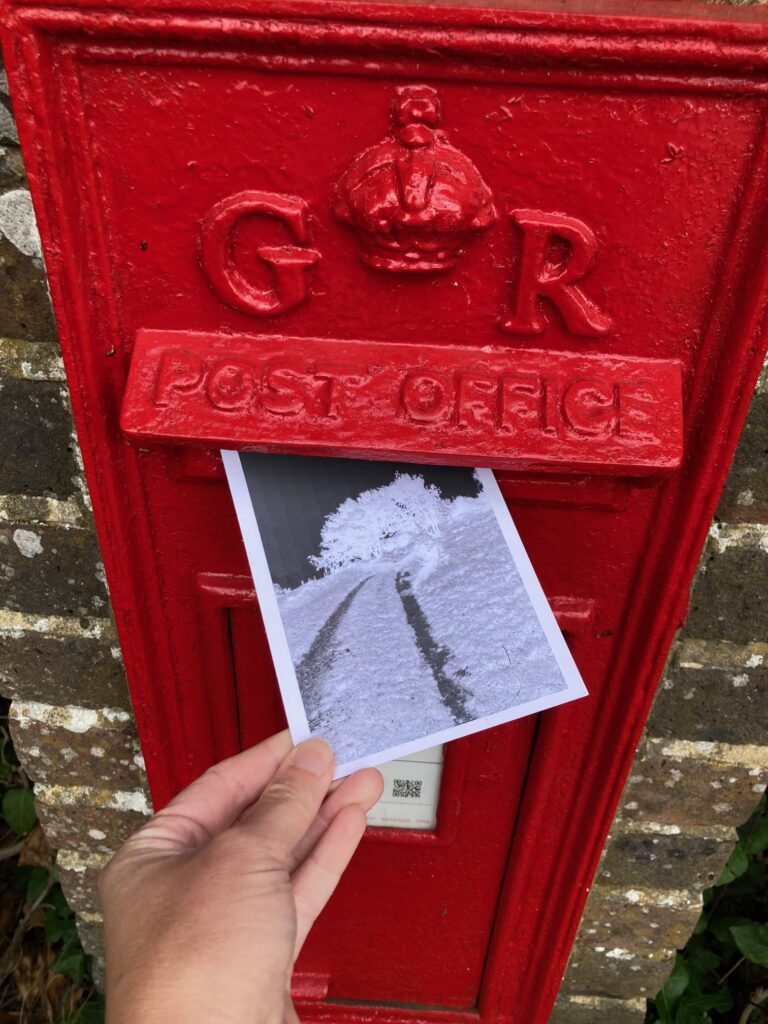
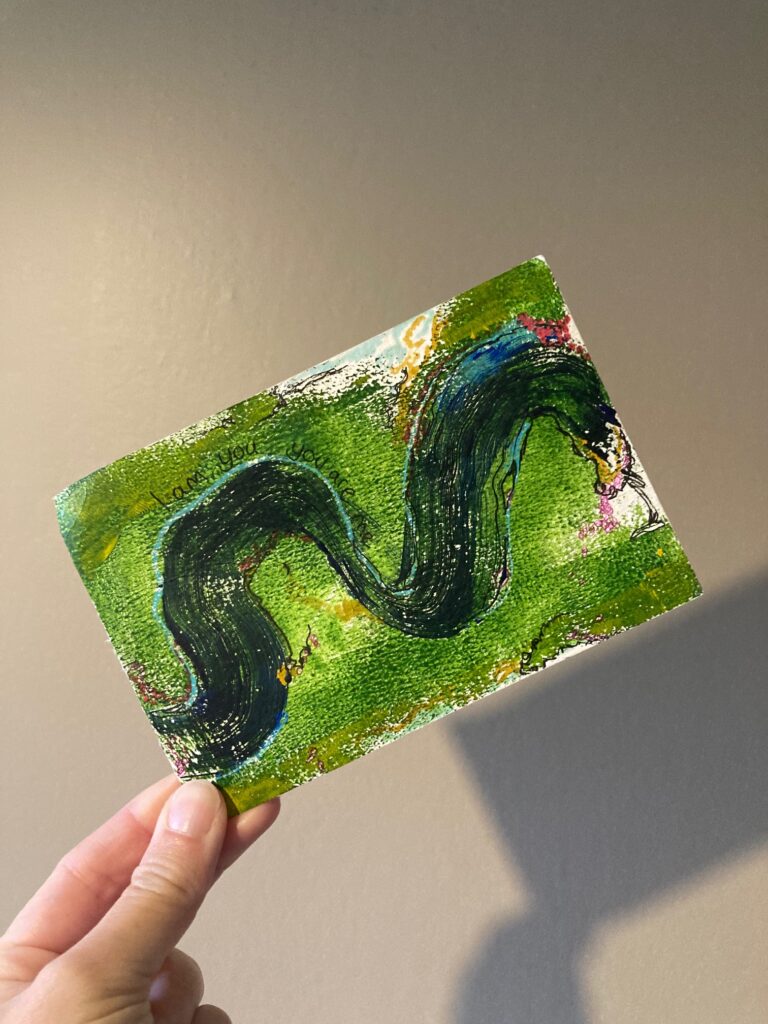
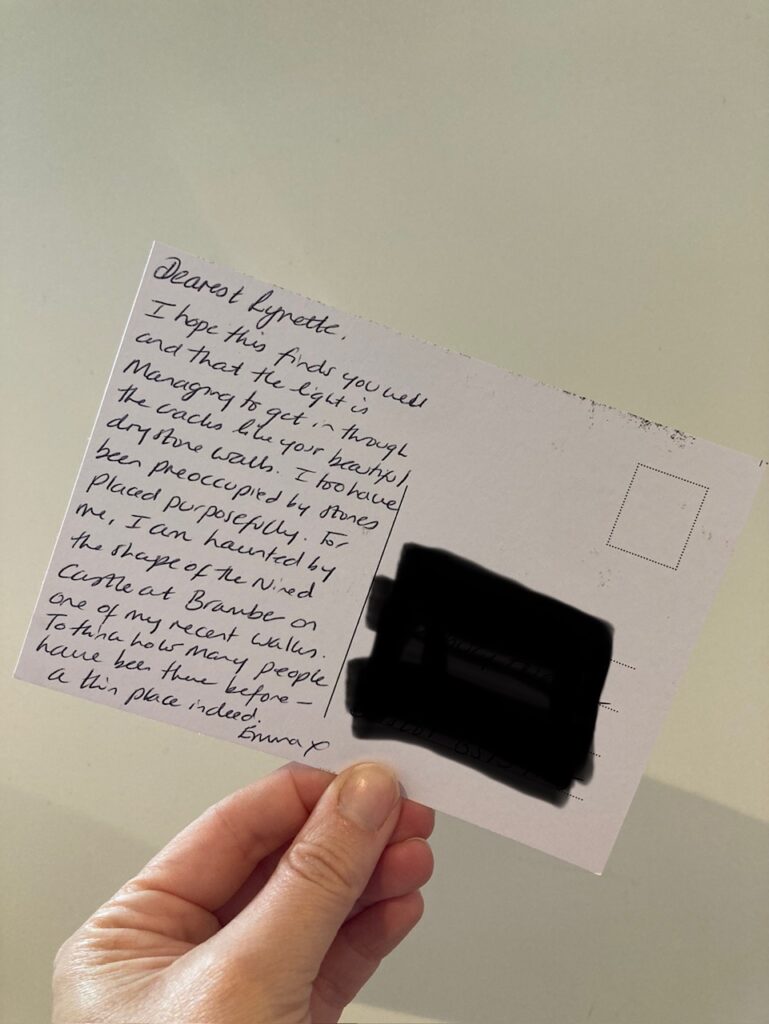
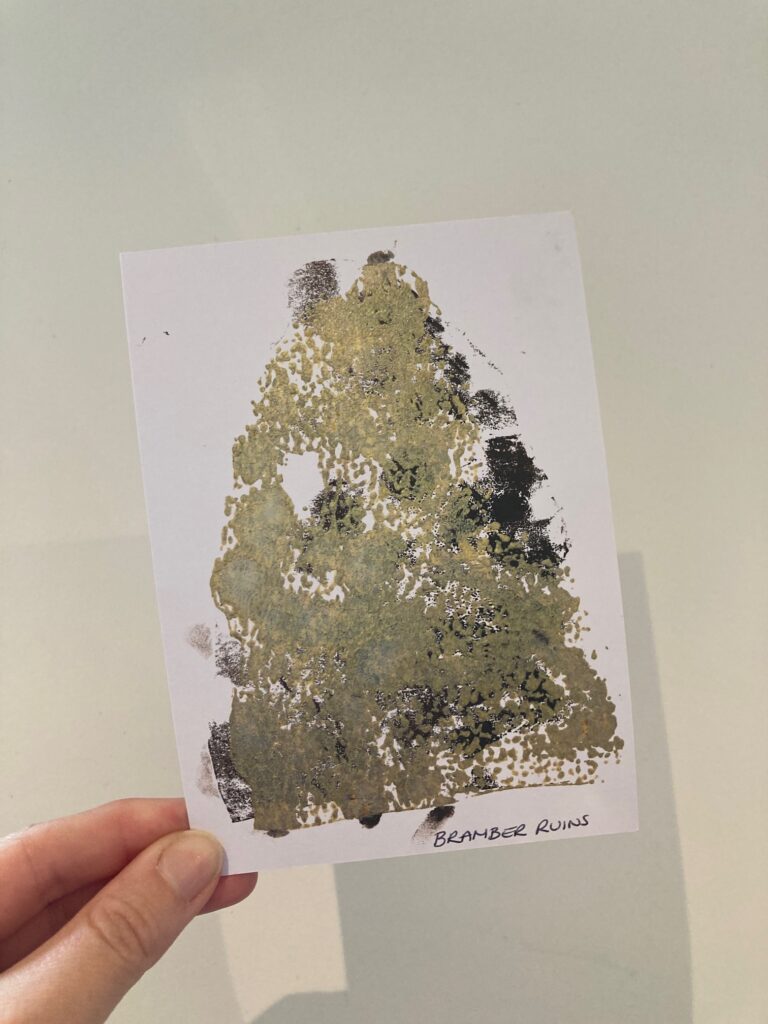
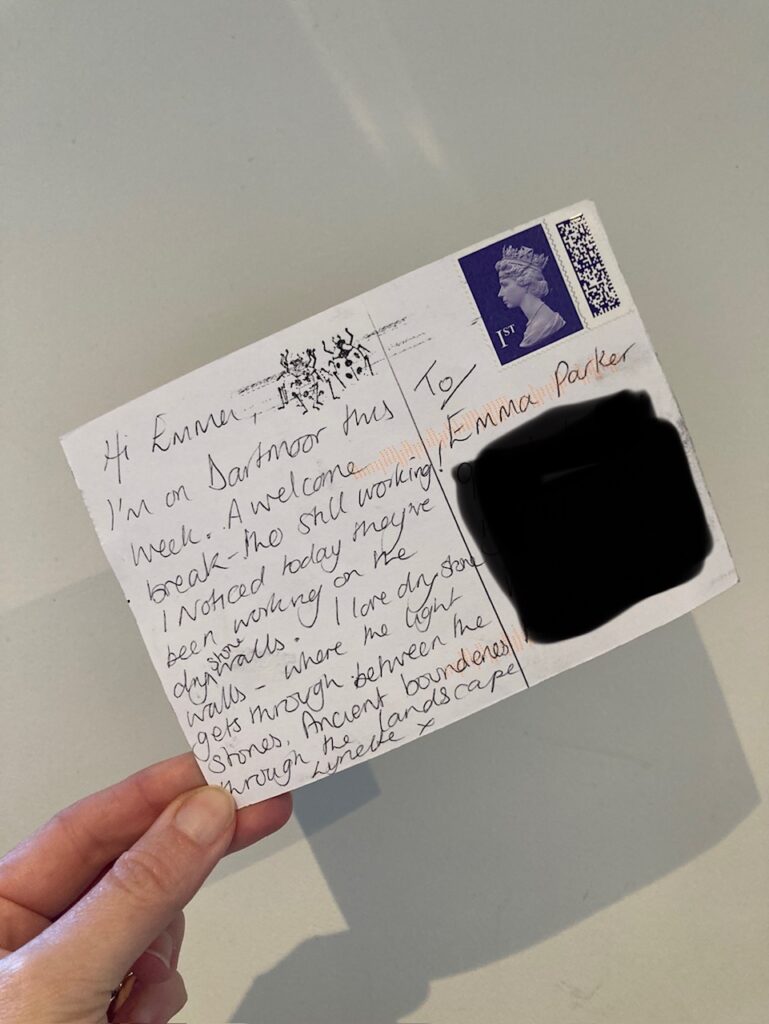
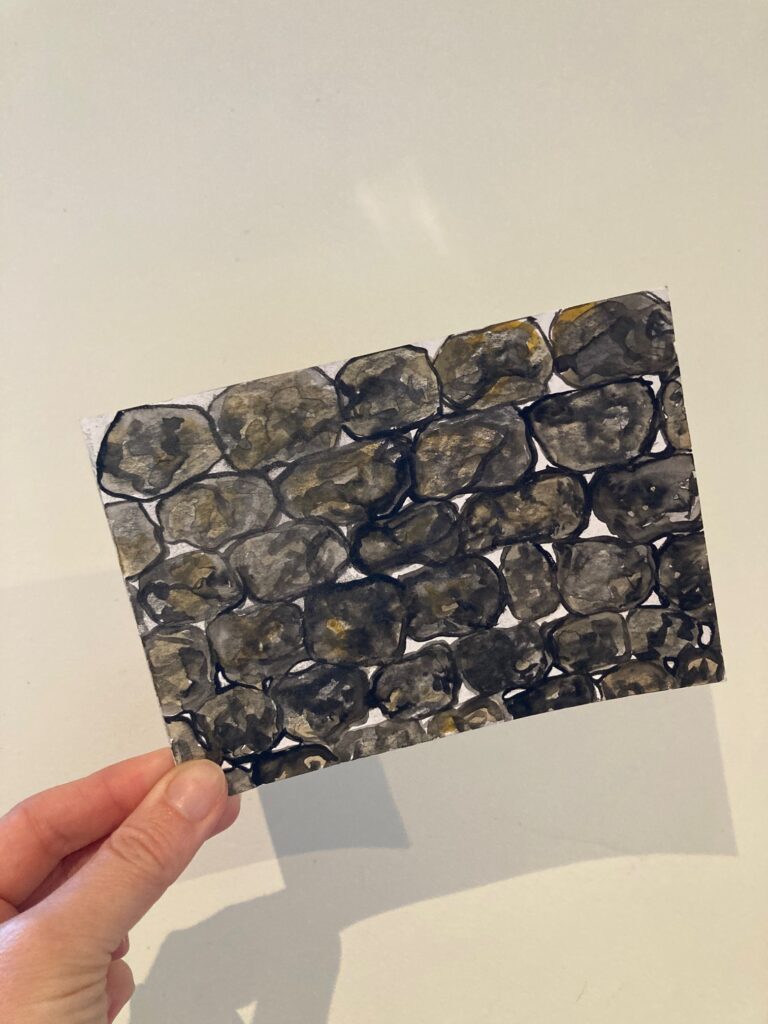
Of course, there have been other moments where friends, family and peers have acted as critical mirrors. Fellow course mate Joseph has been incredibly encouraging with feedback on my works in progress. Also, Lynette has offered an opportunity to reflect slowly over shared postcards, offering snapshots into both of our developing ideas. My parents and family have been regularly offering words of encouragement and support. At work, students have shared in my journey and visiting artists have spoken about me as a fellow artist after conversations about my developing practice.
It feels ironic that by moving towards subjective knowing and away from the idea that ‘everything I say about myself is what other people tell me I am’ (Belenky et al, 1986, p. 48), I have actually felt more positive and receptive to what other people think. I know that one of the things that prevented me as a child/school pupil from following a path in art or taking creative risks, was a childhood desire to be adored/praised (Gould, 1978). This shift towards subjective knowing has been very liberating. I have challenged what art is to me. I have focused more on the process than the polished product. I have gained new skills. I have started to shake off the anxiety about who I am, by defining myself based on what I think other people see me as and started to trust my intuition, voice the unconscious and allow my authentic self to be expressed. I think this is why my work feels so authentic and personal, because it really is an expression of who I am. Funnily enough, now I am not trying to be something I am not or hiding, people (and myself) are more positive than I ever imagined they could be.